
Work on War crimes take A lot of work and assigning spcila teams and counting the numbesrs
It takes time (More than a week to call it war crime)
Work on War crimes take A lot of work and assigning spcila teams and counting the numbesrs
It takes time (More than a week to call it war crime)
this topic is going to need some time so I dont think I am going to finish it today
I may finish it in next week
I hope you like it
reltaed topic
link 1
link 2
Update Sunday April 9
I hope you are interested in this project
skitching is promoising
it is nice to discover How much you can do in it and How you can discover how project will be and what is possible rule you may fill
additional to know international justice court
additional to know war crime court
-Situation in Tigray
-situation in Myanmar
all efforts that has been done By UN in these situations
there are other situations
it is ok for introduction to start with these 2 situations
next step
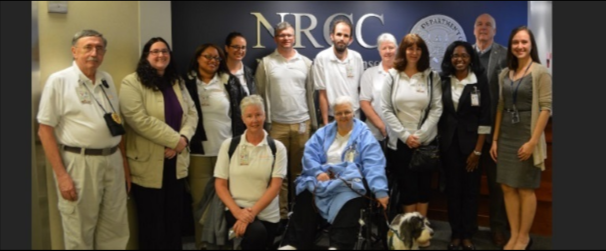
Looks very nice and awesome people
congratulation on your great and honest efforts
here is their website to know more about them
HI
Happy Sunday
this point from this prospective (what does preventing people or reduce building trust )
deception or cheat
this happen to a lot of people , How does it affect ?
we learn from our experiments and situations that we been into.
so its affect may stay or may be released with hope , new day
Point one
you build trust in years and you lose it in a few.
less level that is match less time and effort and less ( say feel when you loose trust)
is confidence with agreements
that what i am looking for
Can Michael Gove’s alleged betrayal of Boris Johnson teach us about ourselves?
Plastered across the British Press are terms such as ‘betrayal’ and ‘back-stabbing’, as Britain reels in reaction to the news that Boris Johnson, widely tipped to the be the UK’s next Prime Minister, has had his ambitions thwarted by his close colleague, Michael Gove.
The fellow Parliamentarian’s decision to stand for election has mysteriously coincided with Boris Johnson’s sudden and unexpected last minute withdrawal from the leadership contest of The Conservative Party.
The result is that the candidate most widely tipped to win, has dramatically, and at the very last moment, pulled out of a fight to become the country’s next Prime Minister, despite apparently harbouring this determination for many years.
The political machinations behind the scenes lead the political pundits to speculate as to whether Michael Gove had plotted all along to become Prime Minister, by first getting rid of David Cameron.
After all, the Prime Minister’s resignation was inevitable had he lost the referendum vote. It may have been Gove who actively recruited Boris Johnson into becoming the lead campaigner of the ‘Leave’ campaign, when the charismatic and popular politician was allegedly wavering over the issue.
It was partly, yet significantly, down to Boris Johnson, most political pundits feel, that the campaign was victorious, then triggering the Prime Minister’s resignation.
Michael Gove, the allegation is, used Boris Johnson to get David Cameron out, and then scuppered Boris Johnson’s chances of standing, so creating an opportunity for Michael Gove to become the UK’s next Prime Minister.
The betrayal, if that is what it was, comes at the end of a closely plotted ‘game of chess’ which began many moves ago, and which has left Boris Johnson looking at best naïve, at worst foolish.
Psychologists might argue that in fact it is this last impact which could in the long run destroy Boris Johnson’s career. If this is true, then Michael Gove, widely perceived as the less charismatic and popular politician, very much the underdog in any competition with Boris Johnson, may have pulled off a remarkable coup, in grasping power through political machinations, despite being the less viable candidate.
Julie Fitness, head of the Psychology Department of Macquarie University, Australia, in a book chapter entitled ‘Betrayal, Rejection, Revenge, and Forgiveness: An Interpersonal Script Approach’, cites research that suggests nearly 19% of men reported having been betrayed by a colleague at work.
Is it possible that betrayal may be a key tool in the Machiavellian art of climbing the greasy pole in any competitive career? If so, then any ambitious person may have a lot to learn from the alleged strategizing of Michael Gove?
Or is betrayal a high risk gamble which inevitably produces a backlash, coming back to haunt and damage the ‘back-stabber’?
In a study of her own, into anger in the workplace, Fitness found betrayal-related ‘rule violations’ (e.g., lying and exploitation) were amongst the most frequently reported types of anger-inducing offence amongst co-workers.
If so, then betrayal, at least when it’s detected, is so upsetting that maybe it’s not worth it?
Fitness points out that treachery and betrayal have been, throughout all human history, considered amongst the very worst relationship offences people could commit. Dante, for example, Fitness reminds us, relegated traitors to the lowest and coldest regions of Hell, to be forever frozen up to their necks in a lake of ice with blizzards storming all about them. Worldwide, the crime of treason continues to merit the most severe penalties, in some places including capital punishment.
From an evolutionary perspective, our survival in ancestral environments within ancient tribes, meant that having evolved as social beings, we critically depended on the degree to which valued others accept and respect us.
Betrayal could have such devastating consequences, it was vital that we developed a mechanism to detect potential ‘cheaters’ and learned only to invest our resources with colleague who were not going to let us down.
This also applies to romantic commitment where the costs of infidelity were so large that it made sense we should be invested in finding intimate partners who were not going to betray us. It is no accident therefore, according to this evolutionary theory, that when it comes to betrayal, women appear much more upset by emotional unfaithfulness in a male partner with another woman, while men are more disturbed by sexual infidelity in a female partner.
Even today psychologists find women are more upset by an emotional betrayal in a male partner while men are most angered by a sexual infidelity in a female partner.
This pattern follows from the theory that back in our evolutionary past women depended most on male emotional commitment as this built an alliance which provided resources to help raise children, whereas men could never be absolutely certain the child a woman produced was their own, so it would be a fatal evolutionary error to commit to a woman who passed on another man’s genes into future generations.
Evolutionary Psychologists therefore go as far as arguing we may have some kind of psychological modules built into our brains to detect betrayal. We are likely to be particularly sensitive to it as it’s so very dangerous to us in a competitive world (as Boris Johnson has just discovered).
But in the ‘arms race’ that is betrayal those individuals who could exploit others through treachery and therefore gain an advantage might also have benefitted from this strategy, so passing on ‘duplicity’ genes into future generations.
You don’t have to competing to be the next Prime Minister for betrayal to become a high stakes game.
Fitness appears to argue in her chapter that key to understanding the psychological reaction to a betrayal and whether, for example, revenge and hatred will be enacted, lies in the realm of how humiliating the experience has been.
For example Fitness concludes from her own research that public humiliation by superiors at work is one of the most destructive long-term outcomes of these kinds of betrayal incidents.
Fitness argues the humiliating discovery that one has been the “last to know” about a partner’s infidelity, may trigger as much pain as the act of betrayal itself.
A key implication is that it’s the power balance between two parties which has been profoundly disrupted. In particular, when a betrayal has been accompanied by deceit or humiliation, Fitness points out, the betrayer effectively assumes a “one-up” position to the betrayed, who has been duped or demeaned.
Evolutionary psychologists contend this is so catastrophic for our social standing, that people will therefore go to extreme lengths to avoid looking weak or foolish.
Is this the key psychological problem that Boris Johnson now faces?
The next move in this chess game of betrayal, according to Fitness, is therefore often pursuit of revenge, to “even the score” between the two parties
Dear Sir and Madam
I hope you are doing well
bringing up the value of trust will be much valuable when you see the result of the opposite
one of the points that make people feel the value of things they have , is when they suddenly lose it (good example, mess happens in places , people that we see suffer from losing their houses, a good pet, someone you like in life, many examples …… )
some people may not going to like it ,please give it a time and read it
this is second topic and may be there will be third
search fir the right content has taken more than 2 hours
i hope you like it is for a good change in the society
I hope you like it
shared :
Human beings need to trust. Trust allays anxiety, helps lift depression, and makes it possible to consistently invest interest and enjoyment in one another.
There could be no civilization, enduring health, or mental wellness without trust. The most ordinary interpersonal, commercial, medical, and legal interactions would be impossible without some degree of trust.
In contrast, distrust is fraught with anxiety and resentment. No loneliness is lonelier than distrust.
Intimate betrayal—abuse, infidelity, deceit, financial manipulation—fractures the ability to trust anyone who gets close to us, including friends, relatives, even children. Yet the human need to trust persists, creating an internal storm of wanting to trust while being terrified of it.
Most people respond to this internal turmoil in one of three ways.
The Slow Path to Wise Trust: Compassion for Self and Others
The secret of trusting wisely is to forget about trust. Your brain won’t let you sustain it as long as you’re hurt anyway, as most defenses are unconscious and run almost exclusively on autopilot. In other words, you’ll be able to trust for a little while but it will, in short order, fall apart. And each time that trust falls apart, it becomes harder to rebuild.
Genuine trust is not a goal so much as a by-product of enhanced core value—the ability to create value and meaning in your life. Focus first on self-compassion and then on compassion for others, and you’ll find that trust will sneak up with you, in its own good time.
My late mother was the model of how to be compassionate while withholding trust. One Thanksgiving, I came home from college to find that my mother had taken in a couple of distant cousins who were out of work.
I was not surprised to see people living in our house. (My mother had overcome the severe battering she suffered at the hands of my father during my early childhood to become a compassionate person of enormous charity and generosity.)
What shocked me was that the closets and drawers in all the rooms, including my bedroom, were locked. I insisted on knowing why.
My mother explained, with embarrassment, that my cousins — her distant nephews — had stolen money from her, along with a few pieces of her costume jewelry, and even some of her clothing.
Enraged at this betrayal, I was ready to throw out the ungrateful, freeloading, petty criminals. But she stopped me cold.
“It’s not hard to keep things locked,” she said. “It would be harder to make them leave when they don’t have anywhere to go.”
I have used my mother’s lesson repeatedly, in my own life and in my work with clients struggling with intimate betrayal: You can be compassionate without trusting.
Wise trust cannot be expected to return fully until self-compassion and core value have grown larger than the fear of being hurt yet again.
The Probability of Betrayed Trust
Intimate betrayal most often occurs when partners violate their deeper values to gain a temporary sense of empowerment. The way that potential partners empower themselves when feeling vulnerable is the most telling way to assess the probability of betrayal.
Knowing facts about their historical behavior in intimate relationships helps, of course. But that is not always possible. Fortunately, there are subtle clues that can help assess probability.
The partner who becomes angry, resentful, or depressed when feeling vulnerable is more likely to shut down, punish, control (emotionally abuse) or seek some kind of temporary ego boost through infidelity or deceit. In contrast, the potential partner who responds to the prospect of vulnerability by trying to improve the situation, appreciate, connect, or protect is far less likely to betray you.
Use the following to assess the probability that a betrayal of trust will occur in a current relationship. If the relationship is new, fill it out every couple of weeks, until you learn more about the prospective partner.
Circle all that apply. When feeling vulnerable (e.g., anxious, devalued, rejected, powerless, inadequate, unlovable), my partner is likely to:
Improve
Appreciate
Connect
Protect
Shut down
Get angry
Deceive
Cheat
Abuse substances
Abuse me
Self-Compassion Means Slow Trust
The more slowly that trust returns, the better; slow trust is more likely to have a solid and durable foundation. Be patient with yourself. Your trusting nature is not lost; it’s just a little bruised.
Those who are worthy of your trust have at least an intuitive understanding of this: Three of the four positive attachment emotions—interest, compassion, and love—are unconditional in healthy relationships. But the fourth, which is trust, must be earned over time.
Justice delayed is justice denied” is a legal maxim. It means that if legal redress or equitable relief to an injured party is available, but is not forthcoming in a timely fashion, it is effectively the same as having no remedy at all.
This principle is the basis for the right to a speedy trial and similar rights which are meant to expedite the legal system, because of the unfairness for the injured party who sustained the injury having little hope for timely and effective remedy and resolution. The phrase has become a rallying cry for legal reformers who view courts, tribunals, judges, arbitrators, administrative law judges, commissions or governments as acting too slowly in resolving legal issues — either because the case is too complex, the existing system is too complex or overburdened, or because the issue or party in question lacks political favour. Individual cases may be affected by judicial hesitancy to make a decision. Statutes and court rules have tried to control the tendency; and judges may be subject to oversight and even discipline for persistent failures to decide matters timely, or accurately report their backlog. When a court takes a matter “under advisement” – awaiting the issue of a judicial opinion, order or judgement and forestalls final adjudication of a lawsuit or resolution of a motion – the issue of timeliness of the decision(s) comes into play.
Comment
It is good chance as people are looking for sort of change, Is to satisfy a lots of points to make the system more fair for every one , ……
Being Positive
Hope for the best
Thanks
Confidence is a state of being clear-headed either that a hypothesis or prediction is correct or that a chosen course of action is the best or most effective. Confidence comes from a Latin word ‘fidere’ which means “to trust”; therefore, having self-confidence is having trust in one’s self. Arrogance or hubris, in comparison, is the state of having unmerited confidence—believing something or someone is correct or capable when evidence or reasons for this belief are lacking. Overconfidence or presumptuousness is excessive belief in someone (or something) succeeding, without any regard for failure. Confidence can be a self-fulfilling prophecy as those without it may fail or not try because they lack it and those with it may succeed because they have it rather than because of an innate ability.
The concept of self-confidence is commonly defined as self-assurance in one’s personal judgment, ability, power, etc. One’s self-confidence increases as a result of experiences of having satisfactorily completed particular activities.Self-confidence involves a positive belief that in the future, one can generally accomplish what one wishes to do. Self-confidence is not the same as self-esteem, which is an evaluation of one’s own worth, whereas self-confidence is more specifically trust in one’s ability to achieve some goal, which one meta-analysis suggested is similar to generalization of self-efficacy. Abraham Maslow and many others after him have emphasized the need to distinguish between self-confidence as a generalized personality characteristic, and self-confidence with respect to a specific task, ability or challenge (i.e. self-efficacy). Self-confidence typically refers to general self-confidence. This is different from self-efficacy, which psychologist Albert Bandura has defined as a “belief in one’s ability to succeed in specific situations or accomplish a task”[4] and therefore is the term that more accurately refers to specific self-confidence. Psychologists have long noted that a person can possess self-confidence that he or she can complete a specific task (self-efficacy) (e.g. cook a good meal or write a good novel) even though they may lack general self-confidence, or conversely be self-confident though they lack the self-efficacy to achieve a particular task (e.g. write a novel). These two types of self-confidence are, however, correlated with each other, and for this reason can be easily conflated.
Comments
Self confidence and building a trust both are needed
found it it is good to bring it
I may add more comments in this part
I hope you like it
The role and importance of trust in all your engagement efforts cannot be under-estimated or under-valued. Without a purposeful and consistent effort to foster trust and build strong relationships at every step of the way, even the best-designed and thoughtful engagement processes will almost certainly either fail or fall far short of the success you seek to achieve.
While there are a number of keys to building trust within any group, it’s important to realize that this ethos should permeate every aspect of your engagement program.
The challenge of course is that we have entered an era of declining trust (though to varying degrees) in government and institutions of all types and across most nations. As has been widely documented, this poses serious challenges to those of us seeking to engage communities in an effective discussion, decision-making and participation processes.
Several drivers contribute to this decline in trust – many of which highlight issues that an effective engagement process should be designed to anticipate and/or address. These include:
Several key imperatives are found throughout the substantial trust literature. Each of these can be enhanced – or conversely undermined – in a number of implicit and explicit ways. They include:
In developing your strategies and tools to enhance trust, Stephen M.R. Covey (2006) has identified ‘five waves of trust’ that are worth considering. A brief summary highlights:
The Principle of Credibility. In its simplest form: “do you trust yourself and are you someone that others can trust?” It is critical that you can honestly answer ‘yes’ to both these questions.
This is all about consistent behavior in all your relationships with others. People judge us on our behavior not our intentions.
The principle here is alignment – in essence does your organization structures, policies, and systems engender the trust you want to achieve?
This refers to your organization’s overall reputation – a trust that can be built or destroyed at incredible speed.
This is based on the principle of contribution – do stakeholders see your organization or entity as having a past record of accomplishment and contribution to the things they care about?
In your opinion, what makes a person trustworthy? Do they keep your secrets? Respect your beliefs and boundaries? When you know someone isn’t trustworthy, it affects your relationship. Often, it can break a relationship. People need to have others they can trust. Whether it’s in personal relationships, work, or society as a whole, trust is essential. Here are ten reasons why:
Dr. Amy Edmonson, a professor at Harvard Business School, describes psychological safety as the ability to be yourself without fear of negative consequences. She talks about this concept as it relates to trust in the workplace. When there’s trust between team members, they feel safe psychologically. This means they aren’t afraid that speaking up might cost them their reputations or jobs. Psychological safety is also important in personal relationships. Using the example of a parent and child, a child who trusts their parent isn’t afraid that something they do or say will make their parent stop loving them.
In the workplace, asking questions and taking risks leads to innovation. If a team doesn’t have trust in each other, though, they’re much more likely to avoid questioning and risk-taking. It goes back to psychological safety; they don’t feel confident their questions will be respected. In personal relationships, questions and risks are just as important. People can express their concerns, ask for what they want, and question decisions. This encourages more understanding.
When trust is built into an organization or relationship, decision-making is a faster process. Everyone knows that the decision-making person or entity has the best intentions. They’ve proven themselves competent in the past. No one needs to pick apart the decision-making process or check it thoroughly for errors, so everything moves faster. In many environments, a fast decision is essential and makes life better.
Good communication is important in every type of relationship whether it’s one between two people or between different parts of an organization. If there isn’t trust between the participants, communication suffers. There’s fear that what is communicated might be used as retaliation or – at the very least – it won’t be respected. People will hide things from each other, which can only have negative consequences down the road. Misunderstandings are more common. When there’s trust, communication is open and honest.
In environments where there isn’t trust, a person can’t rely on others to respect their opinions and value. Without that affirmation, it’s very easy for a person’s confidence to plummet. They won’t take as many risks or express their creativity. Within a safe space of trust, people can be themselves and be validated. This can only boost their self-confidence and encourage more trust and vulnerability.
Combine risk-taking, fast decisions, and self-confidence in the workplace, and you end up with a more productive workplace. When there isn’t trust, everything takes longer. There’s less unity and higher stress levels. Micro-managing is the norm. As a result, a company is less productive. This can have financial consequences, and eventually, an organization can fall apart.
Trust is the backbone of healthy, happy relationships whether they’re romantic or not. When you trust that a person respects and loves you, it’s much easier to be vulnerable. Vulnerability is what fosters real, close connection. The journey to getting to a place where there’s trust also builds closeness. With each experience that proves a person’s trustworthiness, others feel more comfortable and safe.
Whether it’s in the workplace or personal relationships, a lack of trust is emotionally exhausting. A person feels like they’re walking through a minefield, unsure when something they say or do could backfire on them. They always feel like they’re looking over their shoulder in case someone is about to stab them in the back. This is extremely stressful. Being in an environment with trust lets a person relax and feel safe. Their stress decreases.
If you look at someone who identifies as a pessimist, odds are they’ve not experienced a lot of relationships or environments with trust. On the other hand, trust teaches a person that the world isn’t all dangerous. There are people out there with good intentions. Research shows that optimism comes with a range of benefits, including better health and longer lifespans.
When trust is embedded into a community as a cultural norm, that community is healthier and happier. This makes sense since communities are just webs of different relationships. Dan Buettner, author of The Blue Zones of Happiness, discovered that when trust is below 30%, a country’s living standards are stuck and unable to grow. Besides gross domestic product, trust is the strongest predictor of a nation’s happiness level.